Smoke, Mirrors, and Microphones: How Reality TV Producers Actually Build the Drama You Can't Stop Watching
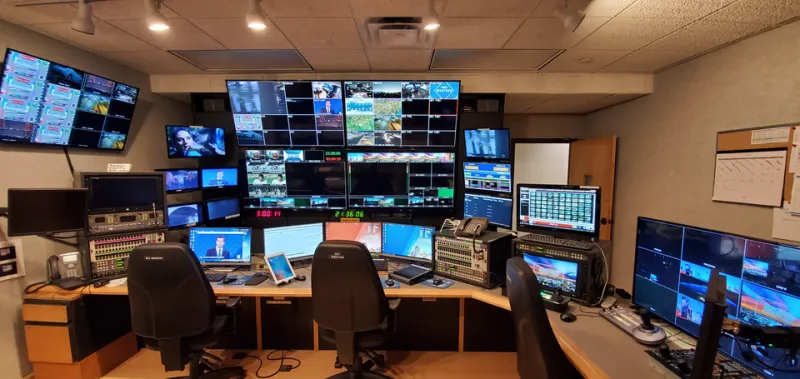
Photo: Asterzenback, CC0, via Wikimedia Commons
You're on your couch, chips in hand, absolutely convinced that Contestant A is the most manipulative villain you've ever seen on television. You've tweeted about it. You've made your group chat go absolutely feral. You might have even sent a strongly-worded comment to their Instagram.
But here's the uncomfortable question nobody really wants to sit with: What if that villain was, at least partly, invented?
Welcome to the machinery behind unscripted TV — a world where "unscripted" is more of a loose suggestion than a hard rule.
The Edit Bay Is Where Characters Are Born
Before a single episode airs, hours upon hours of raw footage get fed into an edit bay where a team of producers and story editors essentially write the show — retroactively. Former editors who've worked on major competition and dating franchises describe this process as building a narrative puzzle where you already know the ending and you're just hunting for pieces that fit.
"You're not documenting reality," one former story producer — who asked to remain anonymous because they still work in the industry — told us. "You're constructing a story that feels real. There's a huge difference."
The most common tool in the toolkit? Frankenbiting. That's industry slang for splicing together audio clips from completely different conversations to manufacture a sentence, a confession, or a reaction that never actually happened in that form. A contestant might say "I think she's smart" in one conversation and "honestly kind of dangerous" in another, and suddenly you've got a soundbite that plays very differently on screen.
Is it legal? Generally, yes — buried in those 50-page contracts contestants sign is language that grants producers enormous creative latitude. Is it ethical? That's where things get genuinely murky.
Restaging: The Industry's Open Secret
Almost everyone who has worked behind the scenes on a major reality franchise will, off the record, acknowledge that scenes get restaged. A confrontation that happened organically but with bad lighting and a producer accidentally visible in the background? They'll pull the cast members aside and ask them to "re-walk" the moment.
Sometimes it's purely technical. Sometimes it's something else entirely.
"There were moments where a conversation had happened, the cameras missed it, and we'd essentially coach people on what was said so they could recreate it," a former segment producer from a well-known Bravo series described. "By the time it airs, it looks completely spontaneous. The audience has no idea."
The more troubling version of restaging involves manufactured confrontations — producers strategically feeding one cast member information about what another cast member said, knowing full well it'll spark a blowup. Think of it as emotional kindling. The fire might be real, but someone absolutely handed them the matches.
Confessional Rooms: The Most Controlled Space on Set
If you've ever wondered why confessional interviews feel so pointed and specific, there's a reason for that. Those aren't just casual check-ins. Producers sit off-camera and guide contestants through a very deliberate line of questioning designed to extract usable, provocative content.
"They'll ask you the same question twelve different ways until you say something they can work with," explained one former Bachelor franchise contestant who spoke to us on background. "You're tired, you might have had a glass of wine, and eventually you say something that sounds way harsher than you meant it. That's the clip that makes the promo."
Producers are also known to show contestants selectively edited footage of their castmates before filming confessionals — presenting a version of events designed to provoke a specific emotional reaction. The outrage you see? It was carefully curated before the camera even started rolling.
The Villain Factory
Every season needs one. The villain is arguably the most important character in any reality TV narrative because they give everyone else someone to root against. But former producers are candid about the fact that villains are frequently assigned rather than discovered.
Casting departments identify contestants with strong personalities and a tendency toward conflict. Once on set, those individuals get what insiders call "the treatment" — they're placed in situations designed to aggravate them, given less sleep than other cast members, kept waiting longer, and sometimes subtly goaded by producers who know exactly which buttons to push.
The resulting footage is then cut to emphasize every eye-roll, every sharp comment, every moment of impatience — while the context that might humanize them ends up on the cutting room floor.
"I've watched someone go from a perfectly normal person to a national punching bag," one veteran editor said. "And I've been part of making that happen. It's something I think about."
Where Does Storytelling End and Deception Begin?
This is the question the industry keeps not answering. Reality TV producers will often frame their work as storytelling — they're not lying, they're shaping a narrative, the same way any documentary filmmaker makes editorial choices. There's genuine craft involved, and dismissing that entirely isn't fair.
But there's a meaningful difference between a documentary filmmaker choosing which interview clips best represent a subject's views and a producer engineering a fake argument between two people who are then subjected to years of online harassment based on a manufactured moment.
The Federal Trade Commission has occasionally sniffed around the edges of reality TV's truth-in-advertising gray zones, but meaningful regulation has never materialized. Contestants have pursued legal action in isolated cases, with mixed results.
What has changed is the audience. Viewers in 2024 are increasingly savvy about production mechanics — Reddit threads dissect editing patterns, TikTok creators break down Frankenbiting examples in real time, and former contestants are more willing than ever to go on podcasts and spill exactly how the sausage gets made.
The Realiteti Take
None of this means you should stop watching. Reality TV is entertainment, and even knowing the machinery behind it doesn't fully strip away the fun. But it does mean that before you go scorched-earth on a contestant's social media, it's worth asking: did this person actually do what the edit told you they did?
The drama is real. The chaos is real. The emotions are real.
The story you're being sold, though? That's been through a lot of hands before it reaches your screen.