Raised Eyebrows, Ruined Reputations: Inside the Editing Booth Where Your Favorite Villains Are Actually Made
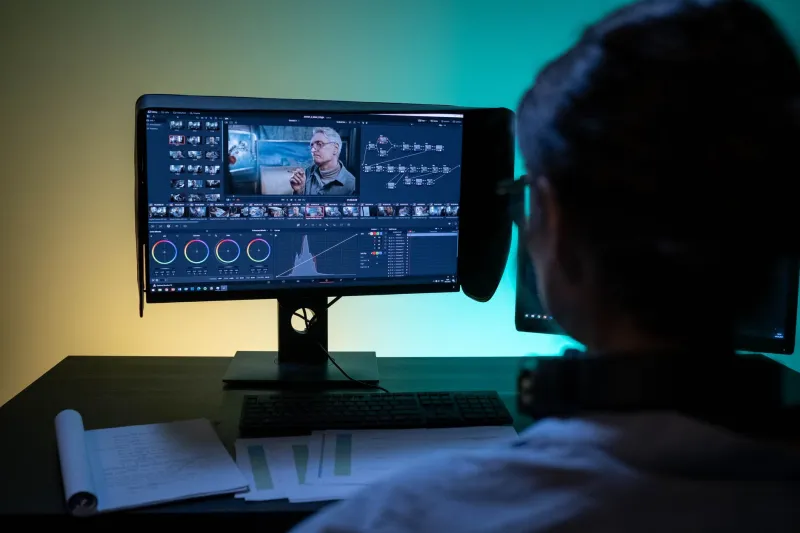
Somewhere in a post-production suite in Los Angeles, an editor is deciding right now whether a contestant you've never heard of becomes America's sweetheart or the most hated person on television this season. No producers present. No cameras rolling. Just a timeline, thousands of hours of footage, and a story that hasn't happened yet.
We spend so much time arguing about what reality stars do — the group chat drama, the dinner party blowups, the shocking exits — that we rarely ask the more uncomfortable question: who decides which version of events we actually see?
The Math Nobody Talks About
Here's a number that should reframe every argument you've ever had about a reality show: a single season of a popular competition series can generate between 1,000 and 2,000 hours of raw footage. What airs? Somewhere between 12 and 16 hours.
That's a cutting ratio of roughly 100 to 1. For every second you see, a minute and a half ends up on the cutting room floor. And in that discarded footage lies a fully alternate version of every contestant — kinder, funnier, or occasionally far worse.
Editors describe it less like filmmaking and more like sculpture. The material is all there; the job is deciding what to carve away. And what gets carved away isn't random. It's guided by story arcs drafted before a single frame is reviewed.
The Arc Comes First, the Person Second
Multiple post-production professionals we spoke to — all of whom asked to remain anonymous, because you don't bite the hand that greenlights your next gig — described the same basic process. Early in the edit, the team identifies which contestants have "story potential." Someone's assigned the underdog arc. Someone's the comic relief. And someone, almost inevitably, gets the villain file.
Once that label sticks, the footage gets read differently. A blunt comment becomes "shade." A competitive streak becomes "arrogance." An editor recalled flagging a contestant's raised eyebrow during a group discussion — a micro-expression that lasted less than a second. The show's story producers loved it. By the time the episode aired, that eyebrow had been replayed, slowed down, and bookended with ominous music until it became the character's entire legacy.
"You can take the same person and cut them as the hero or the villain," one editor told us. "Same footage. Honestly, sometimes the same episode. It's all in what you put next to it."
That's not a conspiracy theory. It's a grammar. Reality TV storytelling runs on juxtaposition — the reaction shot, the cutaway, the scene that ends a beat too early. Put a contestant's joke after a sad moment and they're heartless. Put it after a funny one and they're charming. The footage doesn't change. The neighbors do.
Confessionals: The Narrator Problem
The confessional interview is reality TV's most powerful editing weapon, and its most deceptive. Contestants record these segments hours or days after events, often prompted by producers asking pointed questions. Editors then splice those reflections over entirely different scenes to create causation that may not exist.
"I said something snarky about a housemate in a confessional on Tuesday," one former contestant explained. "In the episode, they played it over a scene from the previous Thursday. Millions of people watched me 'react' to something that hadn't even happened when I said it."
That's the trick: confessionals give editors a narrator. And a narrator, by definition, tells the audience who to root for.
When the Edit Goes Too Far
Most editors insist they're storytellers, not assassins — that they work with what's genuinely on tape, and nobody gets a villain edit for nothing. There's truth in that. Reality contestants do say the things they say. Editors don't invent cruelty; they just decide how much context cruelty deserves.
But the line matters. Contestants sign away nearly all legal recourse to their "likeness and likeness as edited," which means there's no appeal process when a raised eyebrow becomes a character assassination. The reunion special is the only courtroom some of these people will ever get — and even that's edited.
A few former contestants have started fighting back publicly, posting unedited clips, doing tell-all podcasts, and in a handful of cases pursuing legal action over misleading edits. Whether that shifts anything is an open question. The ratings — which spike on villain seasons — suggest the system works exactly as designed.
Watch Different Next Time
None of this means you should stop caring about reality TV drama. The stakes are real, the emotions are mostly real, and the drama is why we're all here. But the next time you find yourself fully convinced someone is trash — or fully convinced they're a victim of a "ruthless edit" — remember that a room full of very tired editors in Burbank made that call months before you ever saw it.
The villain you love to hate? They were cast, shot, and assembled. The hero you'd defend in the group chat? Assembled too.
The editors are the real winners. They always have been. We're just watching what they decide to show us.