One Template to Rule Them All: How Reality TV Started Making Every Show From the Same Mold
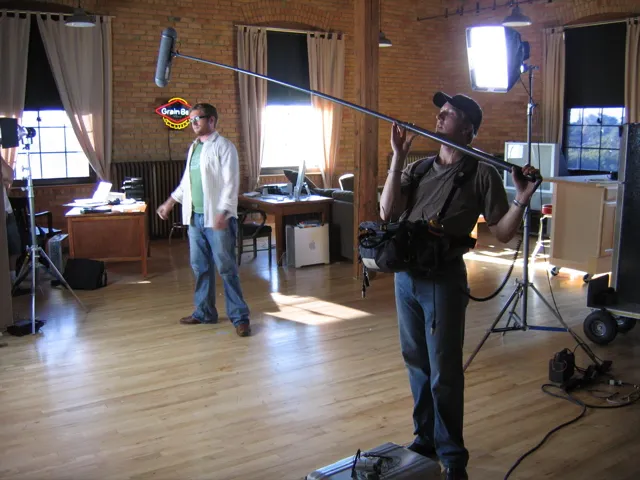
Photo: lance lundstrom, Public domain, via Wikimedia Commons
Put on a competition show. Any competition show. Pick a network, pick a genre — cooking, dating, survival, design, singing. Give it ten minutes.
At some point you'll get a close-up of someone's face right before a result is announced. The music will drop out. There'll be a beat of silence. Then either a swell of triumphant strings or a low, ominous drone. Cut to a confessional where someone says something like, "I didn't come here to make friends. I came here to win."
You've seen it a thousand times. On a thousand different shows. And you probably didn't even notice anymore — which is exactly the problem.
Reality TV, the genre that once felt like it was making things up as it went along, has quietly calcified into one of the most formulaic formats in all of television. And the question worth asking isn't just how it happened — it's whether anyone in the industry actually cares.
The Confessional Industrial Complex
Let's start with the most obvious symptom: the talking-head interview.
Almost every unscripted show on television now uses the same confessional structure. Single subject, neutral background (or a vaguely themed set that nods to the show's concept), direct address to camera, dramatic lighting that makes everyone look either sinister or emotional depending on what the scene needs. The contestant delivers a line that reacts to something we just watched, or teases something we're about to see.
This format exists because it works. It's an efficient storytelling device that lets producers contextualize action, add subtext, and manufacture tension without having to capture any of it organically. But somewhere along the way, "it works" became "it's the only thing we do," and now the confessional is so standardized that the specific show barely matters. The visual grammar is identical whether you're watching a dating show on Peacock or a survival competition on CBS.
Producers will tell you this is because audiences expect it. Which is true — but only because audiences have been trained to expect it by two decades of everyone doing the same thing.
The Emotional Beat Sheet
Beyond the visual format, there's the structural formula — and this one runs deeper.
Most reality TV episodes, regardless of genre, follow the same rough emotional arc. An early alliance or connection is established. Tension enters, usually through a competition result or a perceived betrayal. There's a confrontation, either direct or triangulated through third parties. Someone cries in a confessional. A decision is made. The episode ends on a cliffhanger that may or may not pay off next week.
This isn't accidental. It's a template that production companies have refined over years, and it gets applied wholesale to shows that, on paper, have nothing in common. A dating show and a cooking competition shouldn't feel structurally identical. But turn off the sound and watch the editing rhythm, and they often do.
The emotional beats are so predictable that experienced reality TV viewers have developed an almost reflexive ability to identify exactly where in the episode arc they are based on the music and editing alone. That's not engagement. That's pattern recognition. And there's a meaningful difference.
Copy-Paste Production Design
It's not just the editing. Walk through the physical production of a reality show and the standardization is everywhere.
The dramatic lighting rigs used in elimination ceremonies. The oversized clocks and countdown timers. The way contestants are always staged in a line while a host walks slowly toward them. The specific camera angles used during arguments — one wide establishing shot, then rapid cuts between close-ups of faces to manufacture urgency.
These aren't coincidences. A significant portion of reality TV is now produced by a relatively small number of production companies who work across multiple networks and multiple shows simultaneously. The same producers, the same editors, sometimes literally the same crew members are making five different shows that air on five different channels. Of course they look the same. They're being made by the same people using the same playbook.
The cost efficiency here is obvious. Developing a genuinely new visual language for every show is expensive and risky. Replicating what already tested well is neither.
The Audience Fatigue Question
Here's where the industry gets defensive: they'll point to ratings and argue that if audiences were truly fatigued, they'd stop watching. And technically, that's not wrong.
But there's a difference between watching something out of habit and watching something because it genuinely surprises you. Reality TV viewership has increasingly migrated toward the former. People put shows on in the background. They half-watch while scrolling. They keep up with a franchise not because each episode is appointment television but because they've been watching for eight seasons and the sunk cost is real.
That's not the same as the kind of engaged, invested viewership that reality TV generated in its early years — when the format was genuinely new and nobody knew what was going to happen next, partly because the producers themselves didn't entirely know either.
The shows that still break through and generate real cultural conversation tend to be the ones that do something unexpected — a format twist, a casting choice that defies the template, a moment that couldn't have been manufactured because no one saw it coming. Those moments stand out precisely because everything around them is so aggressively predictable.
Is Anyone Actually Trying to Fix It?
Some are. International formats that get adapted for US audiences occasionally bring structural ideas that haven't been fully processed through the American production machine yet, and for a season or two they feel genuinely fresh. A few streaming platforms have experimented with longer episode runtimes, different confessional styles, or less intrusive scoring — small changes that add up to a different viewing experience.
But the gravitational pull of the template is strong. Advertisers are comfortable with the formula. Network executives know what metrics to expect. And in an industry where a show getting cancelled after one season is considered a failure, the pressure to replicate what's already proven is immense.
The result is a genre that's simultaneously everywhere and nowhere — present on every platform, filling every time slot, and somehow getting harder to tell apart.
Reality TV built its entire identity on the promise of the unexpected. The irony is that it's become one of the most predictable things on television.