Behind the Audition Tape: The Secrets Casting Directors Never Spill on Camera
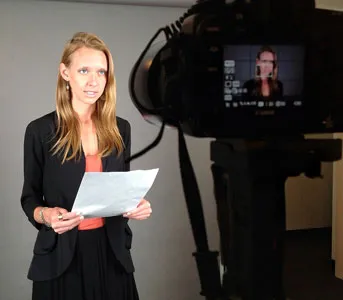
Photo: reality TV audition casting director reviewing applications, via blogger.googleusercontent.com
Every year, hundreds of thousands of Americans fill out applications, record audition tapes, and cross their fingers hoping to land a spot on their favorite reality show. Most of them never hear back. A small fraction get a phone call. And an even tinier slice actually end up on TV. So what separates the chosen few from the rest? According to people who've worked inside the machine, it's almost never what you think.
We dug deep — talking to former casting associates, producers who've worked on everything from dating shows to survival competitions, and contestants who made it through (and some who almost did) — to piece together the real story of how reality TV casts are built. What we found is part science, part gut instinct, and part strategy that networks would very much prefer stayed off the record.
It's Not About Being the Most Interesting Person in the Room
Here's the first myth worth busting: casting directors aren't looking for the most fascinating human being alive. They're looking for someone who fits a role. Think of a reality show cast like a ensemble drama — you need the villain, the sweetheart, the wildcard, the underdog, the overconfident one who flames out early. Before a single audition tape gets reviewed, producers often have a rough blueprint of the "types" they need to fill.
"We'd literally have a whiteboard," one former casting associate who worked on multiple network competition shows told us. "It would say things like 'charming but delusional' or 'lovable mess.' We weren't casting people, we were casting archetypes."
That doesn't mean personality doesn't matter — it absolutely does. But your personality needs to slot into something the show already needs. Two equally magnetic people can audition on the same day, and the one who fits the gap on the board gets the call. The other one goes home wondering what they did wrong.
The Phone Interview Is Where It Actually Happens
Most people assume the in-person callback is the big moment. In reality, a lot of casting decisions get shaped during the preliminary phone interview, which can last anywhere from 20 minutes to over an hour. Casting producers are trained to push, provoke, and poke during these calls — not to be mean, but to see how you respond under mild pressure.
Do you get defensive? Do you overshare? Do you laugh off uncomfortable questions or do you shut down? Former contestants describe these calls as deceptively casual — "like chatting with a friend," one Bachelor franchise alum recalled — while simultaneously feeling like every word was being catalogued. Because it was.
Casting teams take detailed notes on emotional range, self-awareness (or the lack of it), and what one producer called "narrative coherence" — basically, whether your life story has the kind of shape that makes for compelling television. People who've lived through genuine conflict, transformation, or loss often score well here, not because producers are exploiting trauma, but because those experiences translate into stakes on screen.
The Red Flags That Get You Quietly Eliminated
So what tanks an application? According to insiders, a few things are almost universal dealbreakers.
Being too media-trained. If you sound like you've practiced every answer, casting directors get nervous. Polished is fine; robotic is a problem. Reality TV runs on unpredictability, and someone who's clearly rehearsed every response is a production risk.
Having an agenda that's too obvious. Everyone knows people go on these shows for exposure, to promote a business, or to find love (or at least Instagram followers). Producers are fine with that. What they're not fine with is someone who makes it the only thing they talk about. If it's clear you're treating the show as a stepping stone and couldn't care less about the actual experience, that reads as someone who'll be disengaged on camera.
Being too stable. This one's uncomfortable but real. Multiple sources confirmed that applicants who present as completely content, conflict-free, and emotionally settled are harder to cast. Not because producers want to put unstable people on TV (though critics would argue otherwise), but because internal tension — wanting something, struggling with something, growing through something — is what drives story.
Bias in the Casting Room: The Conversation No One Wants to Have
Let's not dance around it. Bias exists in casting, and it operates on multiple levels. There's the obvious stuff — physical appearance, age, regional accent — and then there's the subtler kind, the stuff that's harder to name but shapes decisions just as powerfully.
Several former contestants of color we spoke with described a pattern where they felt they were being cast as a type rather than as themselves. "I felt like they wanted a specific version of a Black woman," one former competition show participant said. "And when I didn't match that version in the callbacks, the energy shifted."
Casting directors, for their part, often point to audience research and network notes as the driving force behind demographic decisions — which conveniently places responsibility somewhere up the chain. The reality is likely messier: a combination of genuine bias, institutional pressure, and lazy shorthand that's baked into how "good TV" gets defined in the first place.
Some shows have made visible efforts to diversify both their casts and their casting teams, with mixed results. But as long as the benchmark for a "great cast" is shaped by what's worked historically, the same patterns tend to reproduce themselves.
The Fine Line Between Finding Authentic People and Manufacturing Drama
Perhaps the most revealing thing insiders told us is how thin the line really is between discovering a compelling personality and constructing one through selective casting and editing. A producer doesn't need to fake your behavior if they've done the work upfront of choosing someone whose authentic reactions will generate conflict naturally.
"We don't make people do things," one veteran producer explained. "We put people in situations, and we cast people who we know will react in specific ways. It's not manipulation — it's just really good homework."
Whether you find that reassuring or unsettling probably depends on how much you want to believe in the "unscripted" part of unscripted television. The truth, as usual, lives somewhere in the middle. The emotions are real. The people are real. But the conditions that produce those emotions? Those are engineered with more precision than most viewers ever suspect.
Next time you're watching someone absolutely lose it on a competition show, or fall head over heels on a dating series, just remember: somewhere, months before that moment aired, a casting producer sat across from that person on a Zoom call, quietly deciding they were exactly the right kind of real.